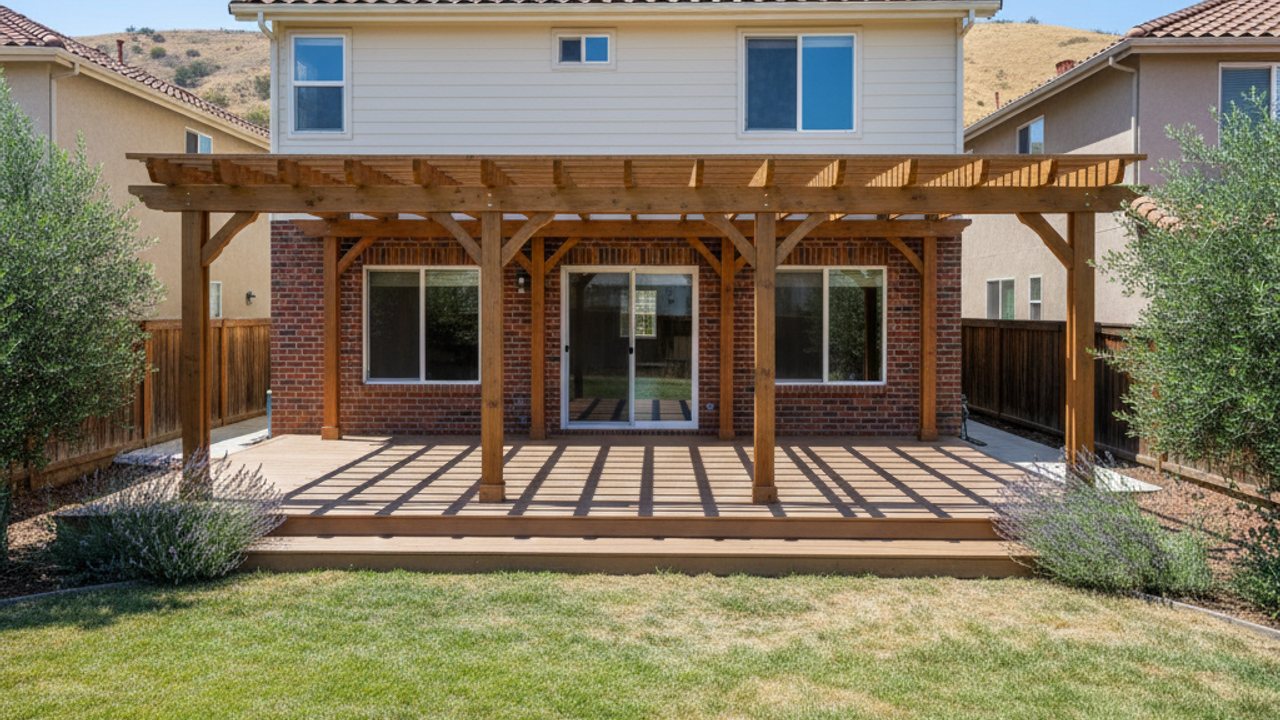
Fresno doesn't have a winter that stops outdoor construction the way it does in colder states. But that doesn't mean any month is as good as another for building or restoring a deck. The Central Valley has its own timing problems, and they're mostly about heat, dry soil, and a narrow gap in between when neither one is fighting you.
If you're planning any deck work, whether it's a new build, a resurfacing job, or just getting the boards stained before summer, the calendar matters more than most homeowners think.
Why Fresno summers are hard on deck work
June through September, Fresno regularly sits at 100 to 108 degrees, sometimes for weeks at a stretch. That heat causes real problems for a few different parts of the job.
Concrete footings poured in that kind of heat can lose surface moisture too fast. The top skin sets before the concrete underneath has cured, which leads to surface cracking and a weaker bond where the post base sits. Concrete needs about 28 days to reach full strength no matter the season, but in extreme heat you have to keep it wet-cured, covered or misted, for the first several days or you're fighting the sun the whole time.
Composite decking has its own heat issue. Composite boards expand in the sun more than real wood does. Installers leave a gap, usually around 1/8 inch, at every butt joint specifically to handle that movement. Install composite decking tight on a 105-degree August afternoon and by January those boards have pulled apart at every seam. Installed in cooler weather with the right gap, they behave the way they're supposed to.
Stain and sealer are the most obvious casualty of Fresno summer. Most oil-based deck stains want a surface temperature between 50 and 90 degrees to soak into the wood properly. Apply stain to a deck surface that's baking at 120 degrees in direct sun, and the product flashes off before it penetrates the grain. You end up with lap marks, blotching, and a coating that doesn't actually protect the wood underneath it. That's a callback job waiting to happen, not a finished one.
Winter isn't off the table, but it has its own limits
Fresno winters bring tule fog, usually thickest in December and January, along with most of the region's rain between November and March. It's not a lot of rain by national standards, Fresno averages around 11 inches a year, but it lands almost entirely in that window.
Wet ground changes how footings get dug and inspected. A lot of Fresno soil, especially in older parts of town, has a clay component that swells when it's wet and shrinks hard when it dries. Footings for a deck need to go down below that active clay layer, typically 18 to 24 inches depending on the post load and what the inspector wants to see, into soil that isn't moving with the season. Digging that hole in saturated clay in January is messier and slower than digging it in October when the ground has some give but isn't mud.
Cold, damp mornings also aren't great for staining or sealing. Wood needs to be dry before a sealer goes on, and a deck that's picking up fog moisture overnight isn't dry until well into the afternoon, which shortens your working window to a couple of hours a day.
The actual sweet spot
For most deck work in Fresno, late March through May and again in October through early November are the best stretches. Daytime temperatures usually sit in the 65 to 85 degree range, which is close to ideal for concrete cure, stain penetration, and composite board installation. The ground still has enough moisture from winter rain, or hasn't fully dried out yet, to make digging footings manageable without being soaked.
Framing and structural repair work, replacing rotted joists, sistering a beam, redoing a ledger board connection, also goes faster in that window. You're not racing the heat to get lumber fastened before it dries out and warps, and you're not working around rain delays either.
Permits and inspections follow the same rhythm
Most deck projects in Fresno that involve a structure over 30 inches off grade need a permit through the city or county building department, with a footing inspection before you pour and a framing inspection before the decking goes down. Inspectors are out in the field year-round, but scheduling tends to move faster in spring and fall simply because fewer weather-related delays are pushing other jobs onto the same calendar. If your lot is in a newer subdivision out toward Clovis or north Fresno, there's a decent chance an HOA is involved too, and getting that approval sorted before the permit application saves you a week or two of back and forth.
Older neighborhoods, Tower District, Fig Garden, and similar areas built decades ago, sometimes have decks or footings already in the ground that were never permitted, or were built to a different code. Repair or resurfacing work on those older structures often turns up surprises once boards come off, undersized joists, footings that were never poured to depth, ledger boards bolted straight to old stucco without flashing. That's more reason to build in a little schedule slack rather than trying to rush a project through in a two-week heat wave in July.
What this means for planning your project
If you have flexibility, aim for spring or fall. If you don't, and summer is the only time that works for your family, the work can still get done right, it just needs more attention to curing schedules, shade during install, and picking a stain day with a real weather forecast behind it rather than just an open Saturday.
We plan around Fresno's heat and rain patterns on every job, whether it's a new build, a repair, or getting old boards resurfaced before the weather turns. If you're trying to figure out where your project fits on the calendar, take a look at our deck builder work and we can walk through timing for your specific lot and soil.